5 Famous Trademark Fights Around the World
Trademark disputes don’t always play out the way you expect. Sometimes the real drama happens in a place no one sees. Other times, a seemingly harmless joke turns into a courtroom debate. Here are five cases—from India, the Middle East, the US, and beyond—that show how complicated (and occasionally strange) trademark law can become.
1. Titan vs. Lenskart: The Fight Hidden Inside Source Code
A few years ago, Titan discovered something odd while examining Lenskart’s website. Buried in the site’s backend code were Titan’s own brand names—Titan Eye+, Fastrack—sitting quietly inside the meta tags. Regular users never saw them, but search engines did.
Titan argued that even this invisible use of their trademark could mislead consumers by pulling search traffic toward Lenskart. The Delhi High Court agreed. It held that hidden meta tags can still amount to trademark infringement because they influence consumer decisions long before a shopper reaches the website. Lenskart removed the tags and assured the court it wouldn’t repeat the mistake.
The case became a reminder that in trademark law, what’s hidden matters just as much as what’s displayed.
2. Facebook vs. FaceMash: A UAE Startup Learns a Hard Lesson
A small UAE-based startup launched an app called “FaceMash,” probably assuming the name was harmless and distinct enough. Facebook, unsurprisingly, did not see it that way. The company moved quickly to challenge the mark in the UAE, arguing that FaceMash sounded too close to its family of marks and could mislead users.
UAE law gives broad protection to well-known international trademarks. That advantage worked entirely in Facebook’s favour. The court sided with the tech giant, and the startup was required to drop the name altogether. For new businesses in the region, this case is often cited as a warning: global brand names aren’t to be improvised with.
3. Apple vs. Samsung: When a Shape Becomes a Legal Battlefield
The Apple–Samsung war has many chapters, but the trademark angle is particularly interesting. Apple claimed that Samsung copied the basic look of the iPhone: the rounded rectangle, the bezel, even parts of the home screen layout. It wasn’t about circuits or software—it was about the overall impression the device created.
A US jury famously awarded Apple more than a billion dollars in damages (a figure later revised), accepting that certain design elements had become so closely associated with the iPhone that copying them would mislead consumers. The case pushed the boundaries of what “design” and “trade dress” can protect and set off debates across the tech and legal world.
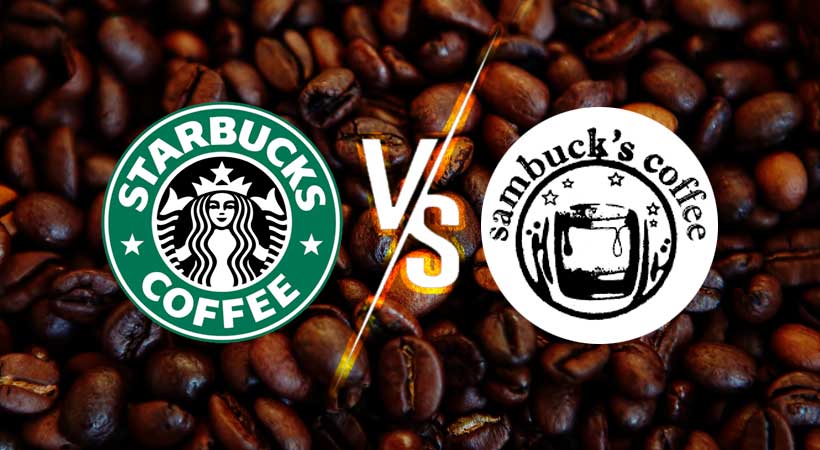
4. Starbucks vs. Sambuck’s: A Name That Came Too Close
In a small American town, a café opened under the name “Sambuck’s Coffee,” run by a woman whose actual name was Sam Buck. She wasn’t trying to imitate Starbucks—at least not intentionally—but the resemblance was impossible to ignore.
Starbucks sued, arguing that the name and presentation could easily confuse customers. Sam Buck defended herself by pointing out that it was her real name. The court sympathised but ultimately ruled in Starbucks’ favour. Personal names are not a defence when they create a likelihood of confusion with a well-known mark.
It was a straightforward ruling, but one that continues to be cited in trademark classes across the world.
5. Louis Vuitton vs. Chewy Vuiton: Parody in the Dog Toy Aisle
One of the more entertaining cases in trademark history involved a company that sold dog chew toys under the name “Chewy Vuiton.” The packaging echoed Louis Vuitton’s iconic patterns, and it didn’t take long for the luxury brand to file a lawsuit.
Louis Vuitton argued that the toys diluted its brand and capitalised on its prestige. Surprisingly, the court disagreed. It held that the dog toys were an obvious parody and that no reasonable shopper would think Louis Vuitton had started making pet products. Because there was no real likelihood of confusion, the parody was allowed.
The case became a landmark example of how humour and imitation can coexist legally with powerful trademarks—so long as consumers aren’t misled.
Final Thoughts
These cases show how flexible and wide-reaching trademark law can be. Whether it’s hidden metadata, a borrowed name, a minimalist design, or a parody that pushes boundaries, brands take their identity seriously. Courts across different countries may approach the details differently, but one theme runs through all these disputes: trademarks aren’t just legal rights—they’re business strategies, reputations, and sometimes even cultural symbols.